A r/ONEPIECETCG thread about slotting an OP14 Crocodile into an OP17 Elbaph Luffy list is a good excuse to price the nine-month-old set.
A deckbuilding question surfaced on r/ONEPIECETCG this week: a player running a stock OP17 Elbaph Luffy list asked whether an OP14 Crocodile was worth the slot, or whether the room is better spent elsewhere. Tech choices like that quietly move singles demand backward into older sets, and OP14 is nine months old with a box that already trades at 2.2 times its $119.76 MSRP. From issue price, that works out to 191% annualized.
> $264.57 · what a sealed OP14 booster box costs today
OP14 at 2.2x MSRP
The one-year figure on the set is 46%, with 21% over the trailing three months, so the move is not a single spike that has since decayed. That is a slower, more boring curve than the headline multiple suggests, which is usually what a set looks like once the chase cards settle and the playable commons do the carrying.
Contrast the set the thread's deck actually comes from. OP17 is two months old, its box prints $305.18, and its three-month annualized number is -76%. New sets price on hype and then find a floor. OP14 has already done that part.
Inside the box
Rip EV on OP14 is $193 against the $264.57 box, an ev_ratio of 0.73. Every sealed box is negative EV by design, so a ratio under 1 is the normal state of the world, not a warning. What 0.73 tells you is that OP14 gives back more of the box price in expected singles than most, enough to rank second on our EV leaderboard behind OP11 at 0.76. Pack cost works out to $11.02.
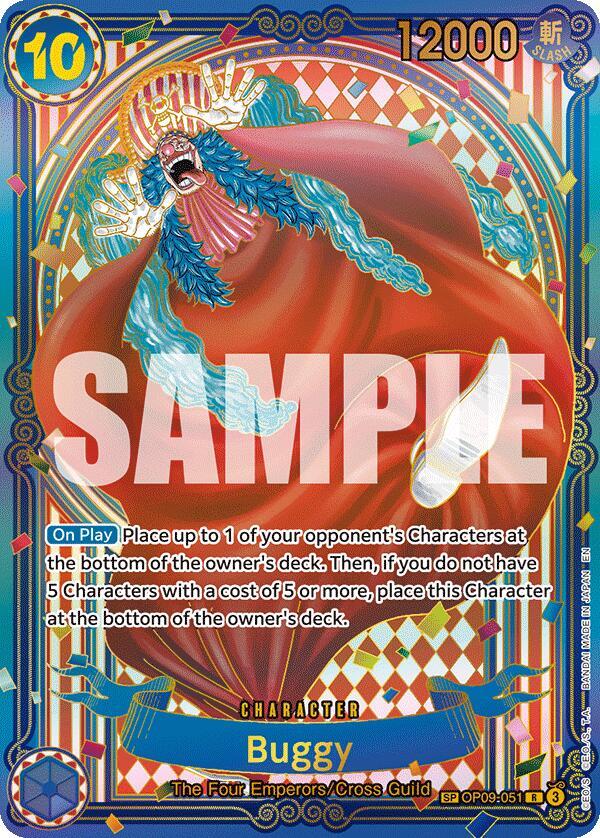
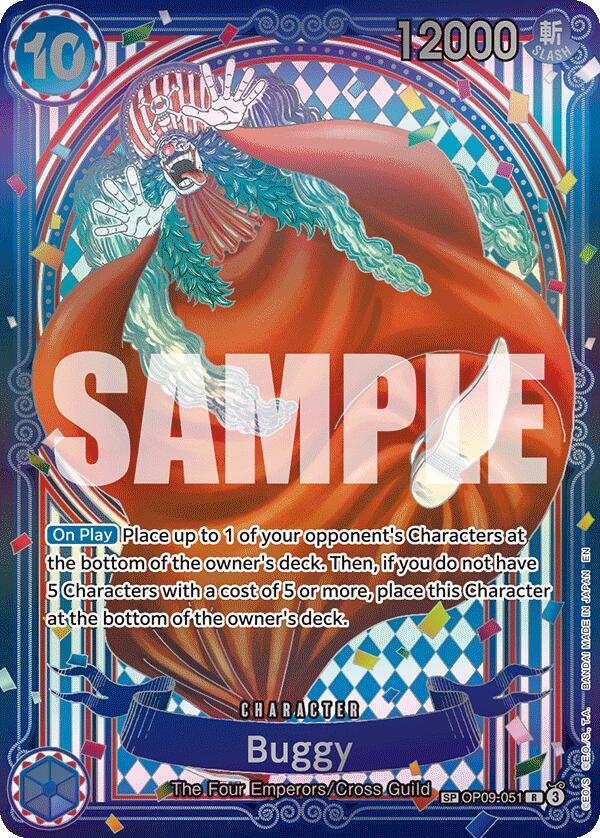
The gold Buggy shown above is the apex of that list and it is flat, down 0.5% on the week and the same over thirty days. Its all-time high was $2,876.66, so the chart is a long way from the top and currently doing nothing in particular. The non-gold version sits at $820.57 and is similarly inert, off 0.3% on the month.
The graded side
PSA has 53,581 OP14 cards in the population with an 88% gem rate, and graded copies carry a 1.4x premium over raw across the set. We estimate 308,832 boxes have already been opened, which is the number that explains why the sealed curve is gradual rather than vertical: supply exists.
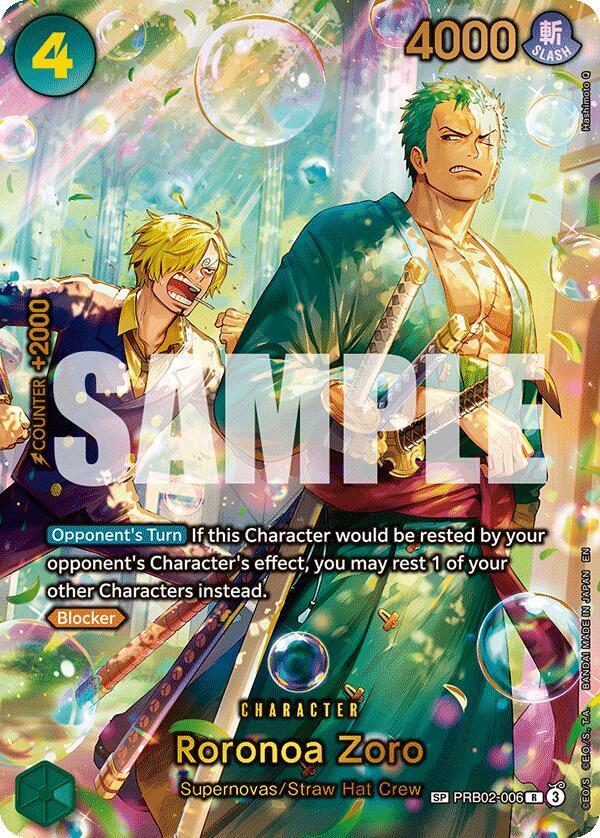
At the card level the gold Buggy has 860 graded copies at a 91% gem rate, and a PSA 10 fetches $2,000, a 1.2x multiple over raw. That is thin compensation for the submission. The Roronoa Zoro SP is the opposite case: 3,389 graded, 87% gem rate, and a 1.6x multiple at $1,422.61. Zoro is also the only one of the three big SPs with a positive thirty-day print, up 1.5%.
Long-term read
OP14 scores 4 out of 10 on our Long-Term Score, labeled Moderate. The drivers are visible in the numbers above: strong EV retention, a large and well-distributed graded population, and a set-level return that has held through three months rather than one. The ceiling comes from the same place, since 308,832 opened boxes is a lot of paper.
OP17's score is 2 out of 10, Unproven, which is simply what a two-month-old set with zero graded population gets. Reprint and burn data for both sits on the destruction tracker, and per-card screens are on the screener.
 ONEPIECE TERMINAL